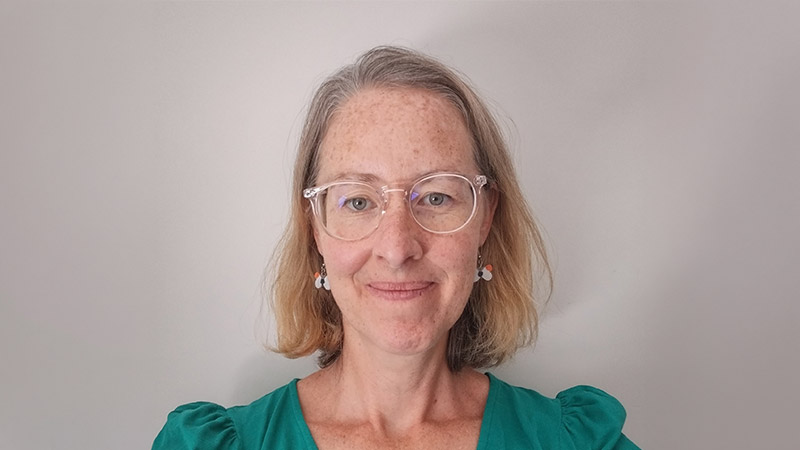
Georgie Humphreys has processed more than 1,200 requests to reuse clinical trial data, but says there is still a way to go before sharing data becomes the norm for academics. In this edition of our Meet the Team series, we’re getting to know Dr Georgina (Georgie) Humphreys, associate, who specialises in clinical data sharing, research funding policy and global health.
You started out working in east Africa, then spent years analysing antimalarial clinical trial data in Oxford, before moving into research funding at Wellcome. What drew you to each move?
My passion for malaria research started when I was a postgraduate at Edinburgh and then Glasgow. After a few years working in temperature- and humidity-controlled insectaries in Scottish university basements, I thought it was time to study this fascinating disease where it was endemic, and to learn from those who live and work in Africa. That is what took me to Tanzania. The move to a research funder was driven by the ambition to change the landscape and culture around data sharing and re-use. I thought that at a wealthy funder like Wellcome we could take risks and support ambitious programmes to shift the research culture. That proved true, and it was a brilliant place to work – collaborative rather than competitive.
You’ve pooled clinical trial data as a researcher and written data sharing policy as a funder. What does each side tend to misunderstand about the other?
What a great question, I’ve never thought about it like that! Basically, the incentives for researchers and funders are different so that’s where the tension lies. Academics are measured on their output of publications and that incentivises holding on to valuable primary data they’ve collected, but funders want the maximum use of the data their funding has supported the collection of, and don’t see the researchers as the ‘owners’. In fact, of course data are really owned by the individuals who donated their time or samples and others are merely custodians. There’s also an interesting dance between researchers and funders as to who sets the research agenda, which dictates where the money is spent. This is also true for multilateral organisations like WHO which is funded by both Member States and other donors who may set fixed rules on what their funding should be spent on.
You run the Independent Review Panel for Vivli and CSDR, which deals with requests to access thousands of clinical datasets. What has that taught you about how shared data actually gets reused, and what still gets in the way, particularly in lower-resource settings?
Yes, I have processed over 1,200 requests to access and re-use data through these two platforms! The bottom line is twofold: 1) hardly any of the available data has been generated through academic-led studies – nearly all of it comes from pharmaceutical companies, who support this system with their personnel time and money; and 2) very few secondary data researchers are based in low-resource settings. There is still a way to go before making data available to other researchers becomes the norm for academics, and there are not enough secondary-data researchers, but some users of these platforms have done fantastic work and had real impact. For example, a team from The Chinese University of Hong Kong analysed 39,029 antimicrobial resistance surveillance isolates from 68 countries to demonstrate how childhood pneumococcal vaccination reduces antibiotic resistance, and Dr Sarah Nevitt’s findings directly guide clinical approaches and medication decisions for epilepsy in the UK.
How did you come to work with Research Consulting, and is there a project that has stood out for you?
I first heard of Research Consulting when we commissioned them at Wellcome and I thought they were such a great team. So when I decided to go freelance, I got in touch to see if I could support the team’s work as an associate. I’ve enjoyed the variety of work with the team over the past few years, but I particularly like the opportunity to interview researchers who are experts in their field and who I would otherwise never cross paths with. I also value work that directly impacts the decisions that organisations make, such as our study for Wellcome on pathogen genomic data sharing in low-resource settings. And it’s lovely to be part of a team, as freelance work can sometimes get lonely!
As an associate, what do you think makes Research Consulting distinctive?
What sets RC apart is its team: experienced, skilled and genuinely humble. I’ve learned a lot from working with them, as there is a real skill in quickly getting to grips with new topics, drawing out the key nuggets of useful information and presenting them clearly and succinctly. I’ve always felt they are a safe pair of hands!
Between funding cuts, antimicrobial resistance and the growth of AI, global health research is under a lot of pressure. Looking ahead, what changes in research data sharing or transparency do you think will matter most over the next few years?
Yes, the current global health funding landscape is definitely a challenge and in fact even the global commitment to multilateral ways of working is wavering, which can be depressing for those of us that believe in the power of working together. But what gives me some optimism is the people I meet and work with – they are still driving the research which ultimately improves healthcare. They will do research faster and use new tools as the technology develops, enabling the power of large clinical data sets to be analysed in new and exciting ways that hopefully get to changes in patient care even quicker than before. What will be interesting is how we as a society decide to set the guardrails for access to our data, and where acceptable boundaries are to how much we’re happy to share or not.
Is there a book, report or paper that has shifted your thinking recently?
Prompted by a comment from a Research Consulting colleague and our recent project with BioFAIR, I read Elinor Ostrom’s Rules for Radicals by Derek Wall which really inspired me to not give up on the idea that collective commons can exist and be sustained. In a world that increasingly feels self-centred, this gave me hope for the future.
And finally, what helps you switch off? Anything that might surprise people who know you professionally?
Gardening! I love growing edibles and for the past couple of years I’ve run the vegetable garden at our local primary school in Cheltenham – I love watching the children’s faces as they eat peas straight from the plant, and try a fresh fig for the first time.